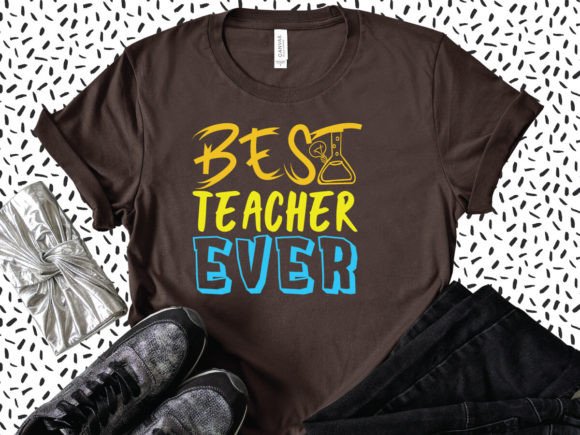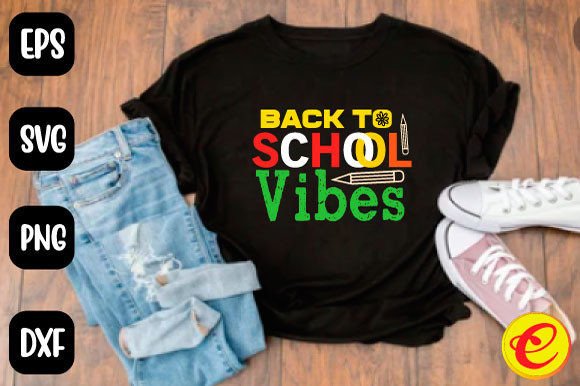
Back-to-School Typography Designs
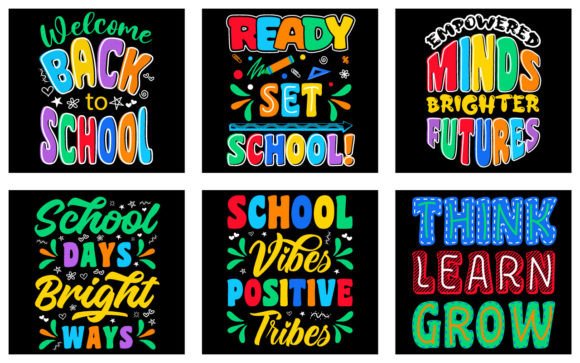
Back-to-School Typography Designs are more than cheerful slogans on a t-shirt—they’re strategic visual tools that communicate energy, growth, and readiness. Whether you're designing merch for a school fundraiser, launching an educator-focused Etsy shop, or refreshing your classroom’s digital signage, these designs bridge aesthetics with intention. The six core quotes—Welcome back to school, Ready, Set, School, Empowered minds, Brighter futures, School days bright ways, School vibes positive tribes, and Think, learn, and grow—are crafted to resonate across age groups and contexts. Each balances clarity with personality, making them adaptable for tees, mugs, tote bags, stickers, social media banners, and even printable lesson plans.
Why people reach for Back-to-School Typography Designs—and where things go sideways
Many creators assume that because typography is “just text,” it’s low-effort to use well. That assumption leads to three common missteps: choosing formats without checking compatibility, overlooking spacing and hierarchy in real-world applications, and treating all designs as equally versatile across mediums.
Take file formats, for example. You might download a design labeled “SVG” only to discover it’s actually a rasterized SVG (i.e., embedded pixels, not true vectors). That means scaling it for a large banner introduces blur or jagged edges—especially problematic if you’re printing on vinyl or sublimation fabric. Similarly, an EPS file that lacks outlined fonts or embedded links won’t open cleanly in newer versions of Adobe Illustrator or Affinity Designer, stalling production before it begins.
Spacing isn’t just aesthetic—it’s functional
Typography thrives on rhythm: letter spacing, line height, and margin balance affect readability at a glance. A design like School vibes positive tribes looks vibrant on screen—but if the tracking (letter spacing) is too tight on a small sticker, the words visually collapse. On the flip side, over-loosening Think, learn, and grow for a mug wrap can make the phrase feel disconnected rather than intentional.
This isn’t about “fixing” the design—it’s about understanding how each quote behaves when resized, rotated, or layered over textures (like canvas or kraft paper). Test prints—even on plain copy paper—reveal what screens hide: awkward breaks between “bright” and “ways” in School days bright ways, or how “Empowered minds, Brighter futures” may need adjusted kerning around the comma to avoid visual imbalance.
Don’t assume “versatile” means “plug-and-play”
Versatility comes from thoughtful construction—not marketing copy. Some designers bundle PNGs with transparent backgrounds but neglect to include anti-aliased edges, causing halos around letters when placed over busy photos or gradients. Others offer AI files but leave fonts live (not outlined), risking substitution if the recipient doesn’t own the typeface—leading to mismatched weights or missing glyphs.
A better approach? Before downloading or purchasing, verify:
- File integrity: Open each format in its native software—even briefly—to confirm layers, transparency, and scalability behave as expected.
- Usage scope: Check licensing terms. Does “personal and commercial use” cover POD (print-on-demand) platforms like Redbubble or Printful? Some licenses exclude resale of unmodified designs—a critical detail if you’re selling mugs or stickers.
- Design intent: Look beyond the preview image. Does Ready, Set, School include alternate layouts (e.g., stacked vs. horizontal)? Are there color variants optimized for light/dark apparel? These options reduce time spent editing later.
Real-world examples: When small oversights create big delays
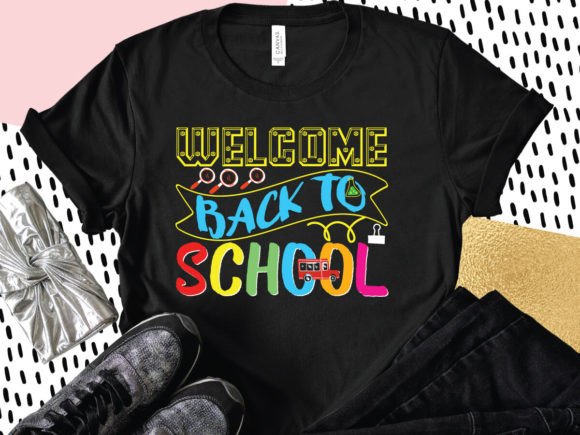
A freelance educator ordered Welcome back to school for her classroom door sign—only to realize the SVG scaled poorly on her Cricut machine. The issue? The file used strokes instead of outlines, so thin letters vanished during cut-path generation. She spent two hours redrawing paths instead of decorating.
Another creator launched a “Back-to-School Bundle” on Gumroad using the School vibes positive tribes design across Instagram posts, email headers, and printable planners—without adjusting contrast for accessibility. Several users reported difficulty reading the light-gray-on-pale-yellow version on mobile devices, leading to lower engagement and support requests.
These aren’t edge cases. They’re symptoms of skipping simple validation steps before integrating Back-to-School Typography Designs into workflows.
How to choose—and use—these designs with confidence
Start by matching format to function. Need crisp embroidery digitizing? Prioritize SVG or EPS with clean, closed vector paths and minimal anchor points. Designing for Canva or Google Slides? High-res PNGs (300 DPI, transparent background) often integrate faster than wrestling with vector imports. Selling on Teespring? Confirm the PNG includes bleed-safe margins and meets platform-specific dimension guidelines.
Next, test legibility early—not after finalizing mockups. Zoom out to 25% view: does Think, learn, and grow still read as one cohesive idea, or does “and grow” visually detach? Try placing Empowered minds, Brighter futures over a subtle chalkboard texture—does the contrast hold up, or does it fade into noise?
Finally, respect the design’s voice. School days bright ways leans playful and rhythmic; forcing it into a rigid corporate slide deck undermines its energy. Instead, pair it with warm, approachable visuals—hand-drawn icons, soft shadows, or sunlit photography. Let the typography guide the tone, not fight it.
What to check before you commit
Before downloading, buying, or building around any Back-to-School Typography Designs, ask yourself:
- Does the preview show actual usage context—not just centered white-background mockups?
- Are font choices legible at small sizes and bold enough for large formats?
- Is spacing consistent across punctuation, uppercase/lowercase transitions, and word breaks?
- Do the included formats support my output needs—screen, print, cut, or web—with no hidden conversion steps?
- Is the license clear about attribution, modification, and distribution limits?
When you align those checks with your real goals—whether motivating students, branding a tutoring business, or supporting a PTA campaign—you turn typography from decoration into deliberate communication. And that’s where Back-to-School Typography Designs earn their value: not as static assets, but as flexible, tested, and thoughtfully built tools that grow with your purpose.