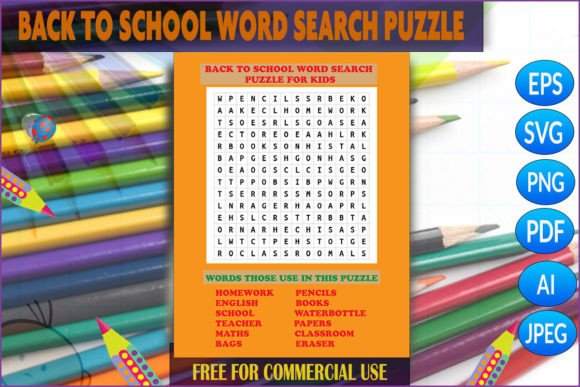
Back-to-School Word Search for Kids
Learning doesn’t need to wait until the first bell rings. A well-designed Back-to-School Word Search for Kids turns anticipation into engagement—building vocabulary, letter recognition, and focus before the backpack is even zipped. This isn’t just busywork. It’s a tactile, screen-free tool that meets young learners where they are: curious, energetic, and ready to make meaning through play.
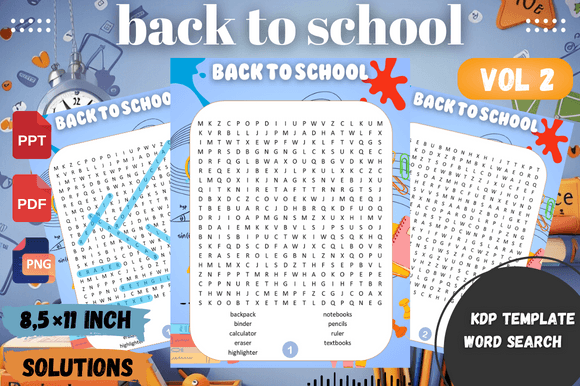
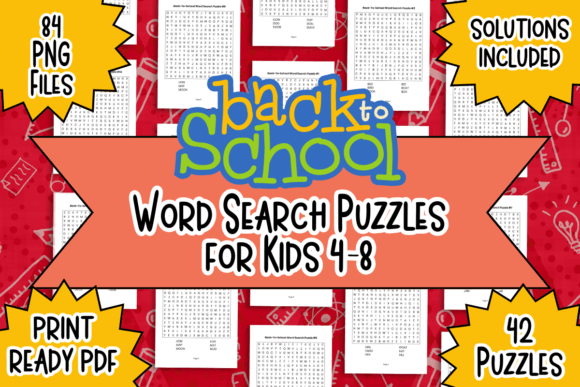
The 42-puzzle collection is built with intention—not repetition. Each word search features age-appropriate terms like “crayon,” “backpack,” “teacher,” “lunchbox,” and “pencil,” carefully selected to reflect real classroom experiences. Words appear horizontally, vertically, and diagonally—but never backward—keeping cognitive load appropriate for ages 4–8. The large-print 8.5 x 11″ format ensures readability without strain, and the clean, uncluttered layout prevents visual overwhelm.
Creative Applications Beyond the Classroom
Educators can embed these puzzles into transition routines—morning welcome bins, quiet-time stations, or early-finisher folders. But their utility extends far beyond lesson plans. Homeschoolers use them as low-prep literacy warm-ups. Therapists integrate them into fine-motor and attention-building sessions. Camp directors print select sheets for “Back-to-School Prep Week” activities—even in summer.
For creators and small publishers, this resource opens doors to smart bundling. Pair it with a simple “First Day Checklist” printable or a “My School Supplies” drawing page to create a cohesive back-to-school toolkit. Designers can rebrand the cover and interior headers—adding custom fonts, seasonal accents (like apples or pencils), or inclusive illustrations—to match an existing brand aesthetic. Because the ZIP includes both Print-Ready PDF and individual 300 DPI PNGs, you can extract single puzzles for social media carousels, email newsletter sign-up bonuses, or classroom newsletters.
Adapting for Different Learners—and Goals
Not every child reads at the same pace—and that’s okay. The Back-to-School Word Search for Kids works across readiness levels because it invites multiple entry points:
- Emerging readers can hunt for beginning letters (“B” for backpack) or match picture cues (if you add icons beside words).
- Developing readers benefit from the included solution pages—letting them self-check and build confidence independently.
- Struggling spellers gain reinforcement through repeated exposure to high-frequency school vocabulary in context.
Family users often turn puzzle time into connection time: grandparents print a sheet before a visit; siblings work side-by-side with highlighters and gentle competition; parents use the puzzles to spark conversations (“What do you think your teacher will like?” or “What’s your favorite thing to pack in your lunchbox?”). That subtle emotional scaffolding—normalizing feelings about new routines—is part of what makes this more than a worksheet.
Practical Tips for Real-World Use
If you’re printing for a group—whether a Sunday school class, library story hour, or co-op learning pod—print the solution pages separately and keep them behind the counter or in a binder. Let kids try first, then review together. This builds perseverance and celebrates effort, not just accuracy.
For digital-first creators: upload one puzzle per week to a private parent community (like a Facebook Group or Mighty Networks space) with a short prompt: “Find three words that start with ‘S’—then tell us one thing you’re excited about this school year.” It’s low-lift engagement that feels personal and purposeful.
Designers working in KDP should know the file structure supports scalability. The 42 unique puzzles mean no duplication across interior pages—a key differentiator in a crowded niche. And because all files are print-ready (CMYK-safe, no bleed, standard margins), there’s no last-minute formatting panic before upload. Just open, verify, and publish.
Why Consistency Matters—Without Sacrificing Originality
Repetition has value—but only when it serves learning. That’s why this collection avoids filler. Every puzzle introduces at least one new vocabulary word while recycling core terms for reinforcement. You’ll notice “desk” appears across several grids—but paired each time with different neighbors: “book,” “glue,” “friend,” “map.” That subtle variation strengthens neural pathways without monotony.
For educators building scope-and-sequence documents, these puzzles align naturally with August/September themes: community, routines, safety, and belonging. For content marketers, they’re evergreen assets—usable every year, easily refreshed with minor tweaks (swap “chalkboard” for “smartboard,” add “water bottle” alongside “lunchbox”). No need to reinvent the wheel—just tune it.
Ideas for Extending the Experience
A word search is rarely the end point—it’s often the spark. Try these grounded extensions:
- Word Art: After finding “pencil,” draw a pencil—then label its parts (“eraser,” “lead,” “wood”). Builds vocabulary + fine motor skills.
- Sentence Starters: Pick two found words (“backpack” + “friend”) and write: “I share my ______ with my ______.” Encourages syntax practice and social-emotional reflection.
- Sound Sorting: Circle all words starting with /b/, then /l/, then /t/. Turns visual scanning into phonemic awareness practice.
- Classroom Hunt: Hide printed words around the room. When a child finds “notebook,” they bring it to the circle. Makes vocabulary tangible and active.
None require extra prep. All honor how young children learn: through movement, repetition, choice, and relevance.
This Back-to-School Word Search for Kids doesn’t promise miracles. It offers something quieter—and more reliable: clarity of purpose, consistency of design, and flexibility of use. Whether you’re designing a product, supporting a child, or planning a week of learning, it’s a tool that shows up ready—no assembly required.